
7 Simple Ways to Increase Your Daily Steps Without Trying Too Hard
If you want to improve your health but struggle to find time for formal workouts, increasing your daily steps is one of the easiest and most effective ways to get moving. Walking requires no special equipment, no gym membership, and fits into almost any schedule. This list offers seven practical strategies that can help you add more steps to your day without overhauling your routine. Whether you work from home, sit at a desk all day, or just want to feel more active, these tips will show you how to make more movement a natural part of your life.
- Try a Walking Pad for Indoor Movement
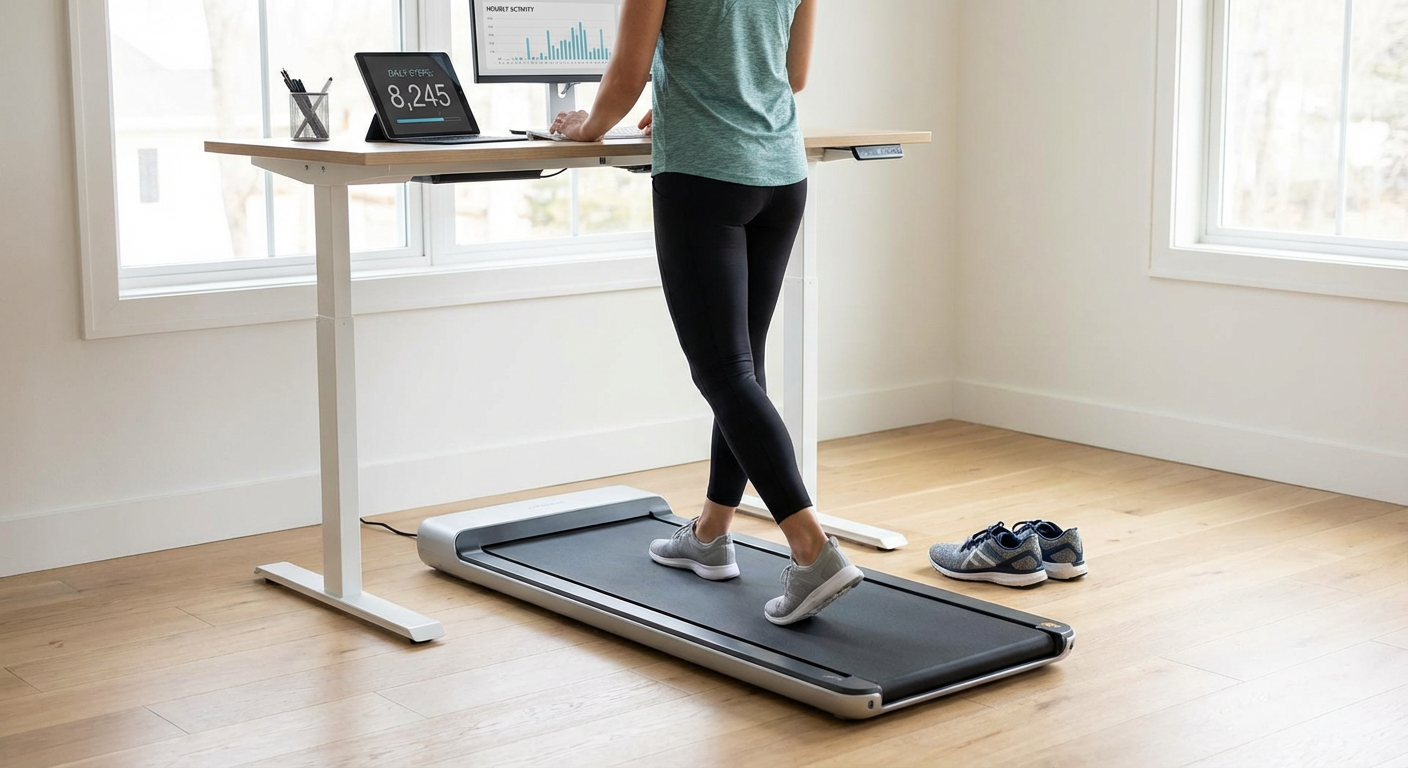
A walking pad is a compact, foldable treadmill designed specifically for walking while you work, watch television, or take phone calls. These devices fit under standing desks or in front of your couch, letting you rack up steps without leaving your home. They run quietly and at slower speeds than traditional treadmills, making them well suited to multitasking. If you are weighing up models, these walking pad reviews and comparisons set out the differences in size, speed and incline.
If weather, safety, or time constraints keep you from walking outside, a walking pad removes those barriers completely. You can walk during meetings, while reading, or during your favorite shows. Over the course of a day, those minutes add up to thousands of extra steps without requiring you to carve out dedicated exercise time.
- Set Hourly Movement Reminders

Sitting for long periods slows down your step count and harms your overall health. Setting a timer or using your phone to remind you to stand and move every hour can make a huge difference. When the alarm goes off, take a quick lap around your office, walk to the kitchen for water, or simply pace while stretching.
Even a two-minute walk every hour adds up to significant step totals by the end of the day. These short bursts also help you stay alert and focused, making them a win for both your body and your productivity. The key is consistency. Once the habit takes hold, you will start moving without needing the reminder.
- Choose Parking Spots Farther Away
This classic trick works because it is effortless and requires no extra time. Instead of circling the lot for the closest space, park at the far end and walk the extra distance. Whether you are going to the grocery store, your office, or the mall, those added steps happen naturally.
The same principle applies to public transportation. Get off one stop early and walk the rest of the way. Or take the stairs instead of the elevator whenever possible. These small decisions compound over weeks and months, turning into thousands of additional steps without any real sacrifice.
- Walk While You Wait
Most of us spend a surprising amount of time waiting. We wait for coffee to brew, for files to download, for dinner to cook, and for appointments to start. Instead of standing still or scrolling on your phone, use that time to walk in place or take a few laps around the room.
If you are on hold during a phone call, pace around your house. If you are early for a meeting, walk the hallway or the block outside. These moments feel insignificant on their own, but they add up quickly. You will be amazed at how many steps you can accumulate just by staying in motion during the little gaps in your day.
- Make Social Plans More Active
Instead of meeting friends for coffee or drinks while sitting down, suggest a walking meetup. You can catch up just as easily while strolling through a park, around a neighborhood, or along a trail. The conversation flows naturally, and you both benefit from the movement.
This approach works for family time too. Take your kids or your partner for an evening walk instead of defaulting to the couch. Walking side by side often makes it easier to talk openly, and the shared activity strengthens your connection. Plus, you are modeling healthy habits for the people around you.
- Turn Chores Into Step Opportunities
Household tasks offer built-in chances to increase your step count. Instead of batching errands or cleaning supplies, make multiple trips. Carry laundry upstairs one load at a time. Walk back and forth while putting away groceries. Take the long route when moving from room to room.
Gardening, vacuuming, and even organizing your closet all involve walking and movement. If you approach these tasks with the goal of adding steps, you will find yourself naturally moving more. The work still gets done, but you are also investing in your health at the same time.
- Create a Morning or Evening Routine
Bookending your day with a short walk sets a positive tone and guarantees you hit a baseline step count no matter what else happens. A ten-minute walk in the morning wakes up your body and mind. An evening stroll helps you decompress and signals to your brain that the workday is over.
You do not need to walk fast or far. The goal is consistency, not intensity. Over time, this habit becomes automatic, and you will find yourself looking for ways to extend it. Some people listen to music, others prefer podcasts or silence. Find what works for you and stick with it.
Increasing your daily steps does not require a complete lifestyle overhaul or hours of free time. Small, intentional changes like parking farther away, walking during phone calls, or using a walking pad at home can add thousands of steps to your day without much effort. The key is to find strategies that fit naturally into your routine and to stay consistent. Every step counts, and the cumulative effect on your energy, mood, and long-term health is well worth the minimal effort. Start with one or two of these tips, build the habit, and watch your step count climb.